The How of Heartworm
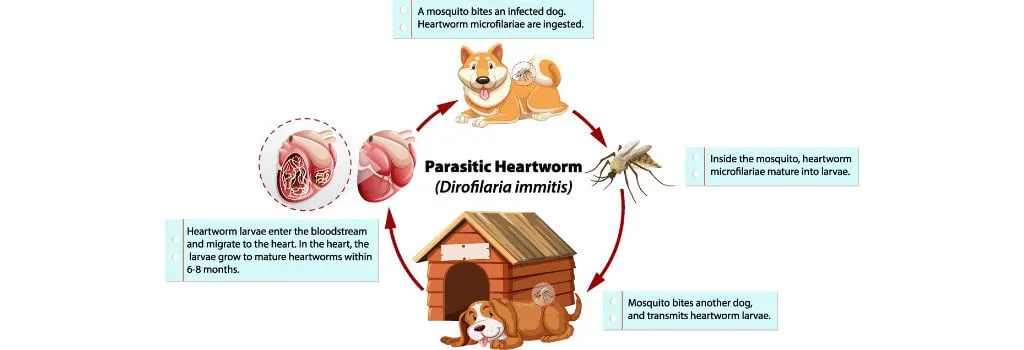
Heartworm disease is caused by a parasitic worm called Dirofilaria immitis. The unsung villain in the spread of heartworm is none other than the mosquito. The disease is transmitted when a mosquito bites an infected animal and then bites your dog, transferring the heartworm larvae into your dog’s bloodstream. This means that any dog, regardless of age, breed, or living conditions, can get heartworm disease if an infected mosquito bites them. Yes, even indoor dogs are at risk!
When a mosquito bites an infected animal, it picks up heartworm larvae. These larvae mature into infectious stage larvae within the mosquito. When this mosquito bites your dog, it transfers the larvae into your pet’s bloodstream. These worms take up residence in the heart, lungs, and associated blood vessels of affected pets, causing severe lung disease, heart failure, and damage to other organs. The disease is as scary as it sounds, but understanding it is the first step towards protection.
Thy Symptoms
Heartworm disease is a master of disguise. In its early stages, your dog might show no symptoms at all. As the disease progresses, signs can range from a mild persistent cough, reluctance to exercise, and fatigue after moderate activity to more severe symptoms like a swollen belly due to excess fluid. Weight loss, difficulty breathing, and pale gums are also red flags.
Preventing Heartworm Disease
The real deal in managing heartworm disease is prevention. Prevention is undoubtedly better than cure, especially when it comes to heartworm disease. Preventive medications are highly effective when administered properly and on a strict schedule. These medications are available in various forms, including monthly chewable tablets, topical solutions, and injectable products administered by a veterinarian.
All dogs, regardless of their lifestyle or location, should be on heartworm prevention and should be tested annually because no preventive method is 100% foolproof. The test confirms the effectiveness of the preventive regimen. The lifecycle of heartworms means they can take several months to mature and be detected, and annual testing helps catch infections acquired since the last test.
Year-round Protection
Remember, it only takes one bite from an infected mosquito to put your dog at risk. Monthly heartworm preventatives are the best way to protect your dog. These medications are safe, and effective, and come in various forms, including pills, topicals, and injections.
I recommend year-round heartworm prevention, even in areas where mosquitoes are seasonal. Mosquitoes can survive indoors during winter, and brief periods of warm weather can activate them. By maintaining year-round prevention, you guarantee continuous protection against heartworm disease and other parasitic infections that these preventatives often cover.
Treatment for Heartworm Disease
If your dog is diagnosed with heartworm disease, treatment options are available but can be complex and costly. The goal of treatment is to kill all adult and immature worms while minimizing the side effects of the treatment. The American Heartworm Society currently recommends a protocol involving several steps:
Stabilization: If the disease has caused significant health issues, we first stabilize your dog with appropriate therapy.
Adulticide Therapy: This involves the administration of a drug called melarsomine dihydrochloride, which kills adult heartworms. It requires multiple injections and strict confinement to reduce exercise-induced complications.
Microfilaricide Treatment: After adult worms are treated, we then address the microfilariae (baby worms) with a different medication.
Follow-up Testing: Several months post-treatment, we conduct tests to ensure all heartworms have been eliminated.
If detected early, the prognosis for heartworm disease can be very good, though treatment is not without its risks. The process to eliminate adult worms can be tough on your dog, and strict rest is required to prevent complications. Prevention is far safer, less expensive, and easier, which is why veterinarians advocate for regular use of preventive medications.
Keeping Our Dogs Healthy
While heartworm disease is a serious and potentially fatal condition, it’s also preventable and manageable with early detection. My message to all dog owners is simple: keep up with regular vet visits, maintain your dog on a heartworm preventative year-round, and be as committed to your dog’s health as they are to making you happy. Together, we can keep heartworm at bay and help our furry friends live long, healthy lives.
Remember, an ounce of prevention is worth a pound of cure when it comes to heartworm disease. Don’t wait until it’s too late; talk to your vet about starting a heartworm prevention regimen today. Your four-legged friend will thank you!
If you have questions and you’d like to reach out to us, you can call us directly at (510) 319-0973, or you can email us at abornpethospital@gmail.com. Don’t forget to follow us on social media Facebook, Instagram.